Monday, June 15, 2009

Bloomin' Hydrangeas!

I'm so excited that the Hydrangeas I planted two years ago are finally blooming. I was reckless in planting them in afternoon sun, but that's where I wanted them to be, so that's where they went.

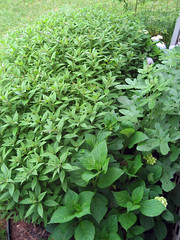
When the gooseneck loosestrife exploded this Spring and hid the plants almost completely, I was worried that they would get crowded out and suffocate.

loosestrife, hydrangeas and hollyhook

As it turns out, the hydrangeas love the shade that the loosestrife have provided and are putting on a lovely show in return.

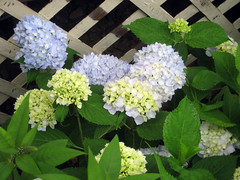
The Penny Mac surprised me with beautiful blue poms.

penny mac hyndrangea in bloom

The Woodlander and Nikko Blue are just starting to bud out, but I will get photos as soon as the flowers open more.

Labels: , , ,

Wednesday, May 13, 2009

Gooseneck Loosestrife - Attack!

If we are ever invaded by a foreign army, I have no worries. My gooseneck loosestrife can easily fend them off and keep our home safe.

I transplanted 12 modest twigs of loosestrife from my MIL's garden in Fall 2007. One of the twigs was mowed down by a bunny, and another mysteriously disappeared in the night.
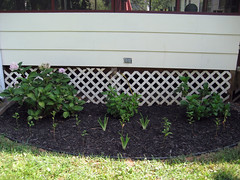
hydrangea garden

I was amazed by how much the plants had filled in the following Spring.

hydrangeas and gooseneck loosestrife

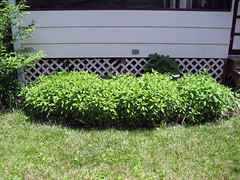
This Spring, I am a little fearful for my yard, as not only has the loosestrife multiplied again, but they are breaking out of their containment area in what looks like an attempt to dominate the neighborhood. I should warn the neighbors. I have little doubt that they could take the cul de sac with minimal effort.
gooseneck loosestrife

My intention was for these plants to fill in this area with a thick lush blanket, and I am overjoyed to see my plan come to fruition in such a short period. If you enjoy the delicate curving heads of gooseneck loosestrife, but fear for your yard's safety, simply cut the bottom out of a large plastic pot, plunge the pot into the ground and plant the loosestrife in that containment area. It will probably keep the plants from spreading ... mostly. Loosestrife is certainly not deterred by poor soil either, so plant it anywhere!

gooseneck loosestrife

I have noticed some people landing on my blog in search of a way to remove gooseneck loosestrife. My suggestion is to dig it up. You would need to completely cultivate the entire area down to 18" to ensure you get all the roots. You won't get them all, but this will be a good start. As you see little baby heads poking back up, plunge your spade deep into the ground around it and extract that bad boy and his roots. I suggest this method over using Round Up although chemicals would be much easier. Please only use chemicals as a last resort. They make the earth cry.

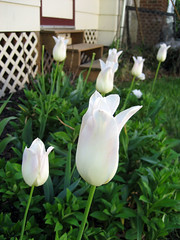
In other news, these pink tulips that are interplanted with the loosestrife turned white this year!
tulips changing color from last year

I suspected that the reason is due to the hybrid bulbs reverting back to their parental form, and my horticulturist / landscape architect / master gardener friend Hillary confirmed that to be true. Pretty cool stuff.

Labels: , , ,

Tuesday, July 08, 2008

Gooseneck Loosestrife

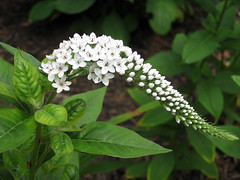
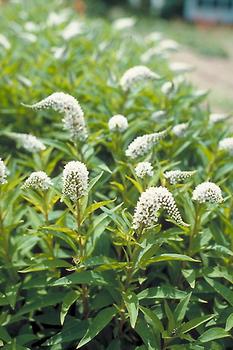
Gooseneck Loosestrife earned its common name from its elegant arches of white flowers thought to resemble a gooseneck. When planted en masse, the numerous plants appear as a gaggle of geese, with each "gooseneck" pointing in the same direction.

gooseneck loosestrife flower

Gooseneck Loosestrife is very easy to grow. It is hardy in zones 3-8, tolerates any soil type (including soil with poor drainage and heavy clay), and will thrive in a full sun or partial shade environment. The white blooms generally appear in mid-Summer and last through late-Summer, but my plants began blooming in late Spring. The plants will reach up to 3' in height, and the green foliage turns a lovely shade of bronze in the Winter. The plants do eventually die back in Winter but re-emerge in early Spring.

This plant is most effective in mass plantings, and since Gooseneck Loosestrife multiplies very rapidly, it is difficult to deter a mass planting from occurring whether planned or not. Since this plant reproduces primarily by running roots, it can be planted in a large pot that is plunged into the ground to help control its invasive tendencies. Moist soil is the catalyst for rapid spreading, so a drier soil should inhibit spreading a bit.

Since Gooseneck Loosestrife multiples so rapidly, it is the perfect perennial to transplant from a friend's garden in early Fall. This bed was created from twelve transplants I took from my MIL's garden last September. Each plant has produced at least three more plants in that time and will be ready to divide next Fall. It is fun to grow plants that can be shared with others!

hydrangeas and gooseneck loosestrife

You can tell by this photo of the original transplants that not only does this plant multiply quickly, but it also grows beautifully. When I dug these from my MIL's yard, I didn't bother with getting much dirt around the roots, but pretty much just yanked them from the ground bareroot. I transplanted them into this heavy clay area that has very poor drainage, but they persisted through the Winter and emerged happily in Spring.

hydrangea garden

We all have those areas of the yard that we want to fill in quickly and don't necessarily care to fuss with throughout the year. Gooseneck Loosestrife is an excellent choice for a low maintenance solution.

Labels: , , ,

Wednesday, April 30, 2008

Gooseneck Loosestrife Transplants

Last Fall I transplanted 13 twigs of gooseneck loosestrife from my MIL's garden into my newly created Hydrangea garden. Here is the view in September.

hydrangea garden

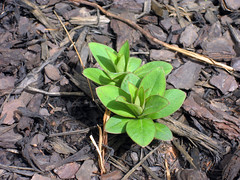
I never thought those spindly little twigs would make it through the Fall let alone re-emerge the next year, but they did! I was surprised to see new growth emerging from the ground in March! At first I thought it must be a weed, but then realized it was the gooseneck loosestrife.

gooseneck loosestrife transplant

Altogether, 11 of the 13 plants made it through the Winter. I know a bunny chomped one completely down to the ground, but I don't know what the 13th ones problem is - LOL! I have heard that this plant is hardy, but wow! They werent' kidding!

I sprinkled some 5-10-5 fertilizer around them and am enjoying watching them grow! There are tulips currently crowding out that bed, but I'll post pictures as they grow this Summer.

Labels: , , , ,

Wednesday, October 03, 2007

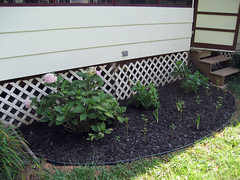
Hydrangea Garden

Here is a view of my new Hydrangea garden. It's not all that impressive at this point, but next year it should be worth blogging about.

hydrangea garden

I was so cruel to create a Hydrangea garden in this location, because it gets nice cool shade until about 1pm when it is hammered with the hot afternoon sun for the rest of the day. How rude of me! I'm probably suffering more than the plants do though, since I am the one lugging water to them every day! Ideally, Hydrangeas prefer early morning sun followed by mid-afternoon shade. I really can't think of a location around my house that offers those conditions though.

I planted three Hydrangeas and underplanted them with Gooseneck Loosestrife and pink daylilies. From left to right the Hydrangeas are; Penny Mac, Woodlander and Nikko Blue. I also bought some lovely pink tulips from Jesse Israel that I have yet to plant, but I hope to get them in the ground this weekend. (I always say I'm not going to buy more bulbs, but I end up giving in when I see all the exciting colors and varieties!)

hydrangea garden

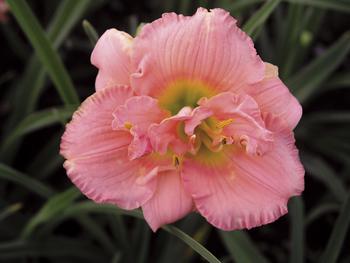
I planted three of these pink Double Classic daylilies in the middle of the bed. These plants are shorter than most daylilies at only 16" tall, so they should be more tidy and compact than other varieties I have seen. I don't particularly like the foliage or habit of daylilies in general, but I am giving this cultivar a chance to redeem all daylilies! I ordered these when they were on sale at Bluestone Perennials, and they arrived in perfect condition. I like to keep an eye on their weekly sale items, because they always have a nice selection.


I filled in the rest of the bed with Gooseneck Loosestrife from my mother-in-law's garden. Gooseneck Loosestrife is a quick spreader, so if you plant it and want to keep it contained, be sure to plunge some sort of plastic or metal barrier at least 6" deep around the plants. Since I want a thick underplanting of Gooseneck Loosestrife, I did not install a barrier around the plants. I want it to spread and fill in that flowerbed until it is overflowing with little white goose necks.


The Hydrangeas will bloom in spring and early summer. The daylilies should bloom in the middle of summer, then the Gooseneck Loosestrife will take over blooming at the end of summer. I hope to keep constant color blooming in this little area. We also plan to replace that hideous skirting soon!

Labels: , , , ,